RV Roof & Leak Repair Services
Florida is brutal on RV roofs. The sun bakes them. The rain pounds them. Hurricane season tests every seam and seal on the rig. We fix all types of RV roofing and track down leaks that other shops miss. Here's what we do.
RV roof leaking? We repair EPDM, TPO, and fiberglass roofs across the Treasure Coast. Sealant application, leak detection, full recoating, vent replacement, and water damage assessment. Mobile service, honest pricing. Call 772-677-9762.
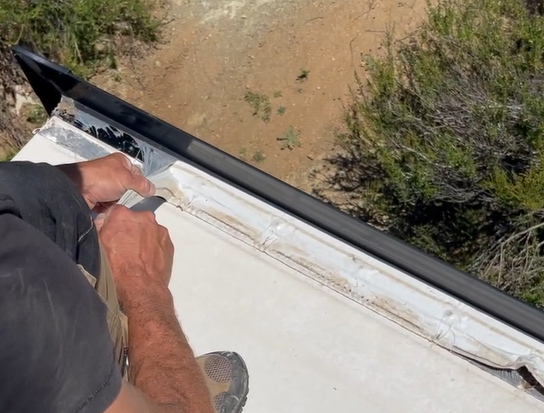
EPDM Rubber Roof Repair
EPDM is the most common RV roof material out there, and it doesn't last forever. We patch tears, fix bubbles, and reseal edges. A simple patch job usually runs $150-300 depending on the size. Way cheaper than a full replacement.
TPO Roof Patching & Replacement
TPO roofs hold up well, but they're not bulletproof. We fix punctures, repair heat-welded seams, and replace sections when needed. TPO patches need to be done right or they'll peel up in the first big storm. We make sure they stick.
Fiberglass Roof Restoration
Fiberglass caps and roofs crack, craze, and oxidize. Especially in the Florida sun. We sand, fill, gel coat, and buff them back to looking like new. Takes about a full day for most rigs. Usually $400-800 depending on the size and condition.
Sealant & Caulk Application
Every seam, every screw, every roof penetration -- including mounts from RV solar panel installations -- needs sealant. And that sealant breaks down over time, especially with UV exposure. We strip old caulk, clean the surface, and apply fresh Dicor or equivalent. This is the single best maintenance you can do for your roof. Around $200-400 for a full reseal.
Roof Vent & Skylight Repair
Cracked vent covers, broken cranks, foggy skylights. We replace the hardware and reseal the mounting flanges. A cracked vent cover is a $30 part, but if you ignore it, you'll be looking at $2,000 in water damage. We see it all the time.
AC Gasket & Roof Penetration Sealing
Your rooftop AC unit sits on a gasket, and that gasket compresses and dries out. Water sneaks in around the bolts and you don't notice until the ceiling's stained. We pull the rooftop AC unit, replace the gasket, and reseal everything. About $175-275 per unit. Takes roughly 2 hours.
Full Roof Recoating
If your rubber roof is chalky, stained, and thinning, a full recoat can add 10 more years to its life. We clean the roof, repair any damage, then apply a liquid rubber coating. Usually runs $1,200-2,500 depending on the length of your rig. Much cheaper than a full roof replacement.
Leak Detection & Water Damage Assessment
Can't find where the water's coming in? We can. We use moisture meters and systematic testing to track down even the sneakiest leaks. Once we find it, we assess any damage to the substrate, insulation, and framing. Then we give you honest options, not scare tactics.
Common Problems We Fix
Water Stains on the Ceiling
You notice a brown ring on your headliner, or maybe some soft spots in the ceiling panel. That's water, and it's been getting in for a while. The tricky part is that water travels. The stain might be two feet from the actual entry point. It runs along wiring channels, follows seams, and pools wherever gravity takes it. We climb up top, test every seal, and find the real source. Don't just caulk over it and hope for the best. We've pulled down headliners and found mold, rotted plywood, and rusted framing from leaks that were "fixed" with a tube of silicone. Get it done right the first time.
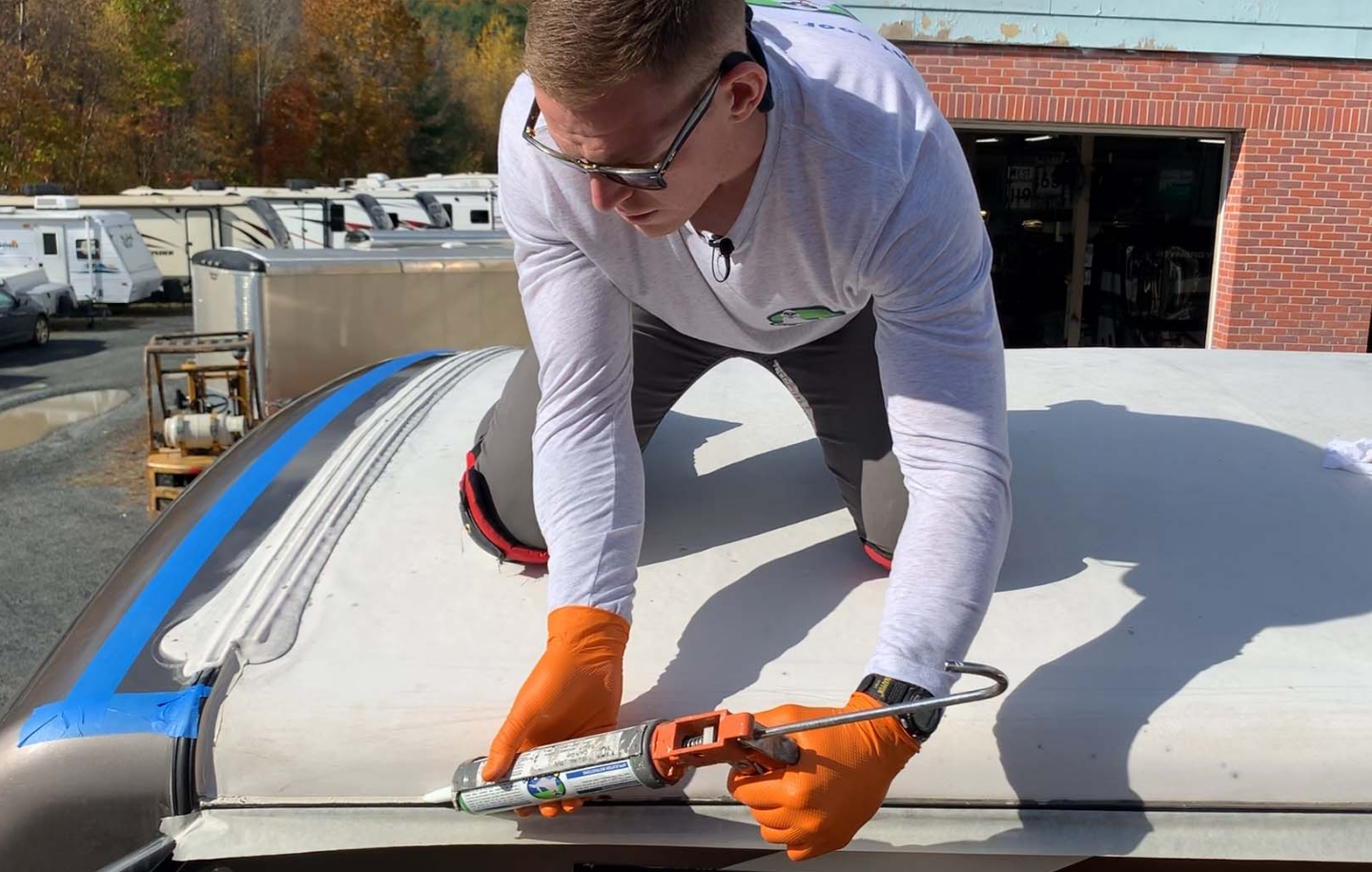
Cracked and Dried-Out Sealant
Take a look at your roof edges, around the vents, around the AC, around the antenna mount. See cracks in the sealant? Gaps? Pieces pulling away? That's normal wear. Florida's UV is brutal, and most sealants start breaking down after 2-3 years. The fix is simple but time-consuming. Strip the old stuff, clean the surface with the right solvent, and lay fresh Dicor self-leveling sealant. It's a $200-400 job that can prevent thousands in damage. We recommend doing this every 2-3 years if you're storing your rig in the sun.
Storm Damage and Debris Impact
Ever had a tree branch come down on your roof during a summer thunderstorm? We get a wave of calls every hurricane season. Punctures, tears, dented vent covers, cracked fiberglass caps. The important thing is to tarp it fast and get it repaired before water does more damage underneath. We respond quickly to storm damage calls because we know every hour counts when there's exposed roof material. We carry tarps, EPDM patches, and sealant on the truck for exactly these situations.
Bubbling or Delaminating Roof Membrane
If your rubber roof has bubbles or sections lifting away from the substrate, that's delamination. It usually means water got underneath the membrane at some point -- often where slideout roof seals overlap the main roof -- or the original adhesive failed. Small bubbles can sometimes be re-adhered with fresh lap sealant and rolled flat. Larger areas might need a section cut out and patched. We evaluate how far the delamination goes and give you the straight answer on repair vs. recoat vs. replacement.
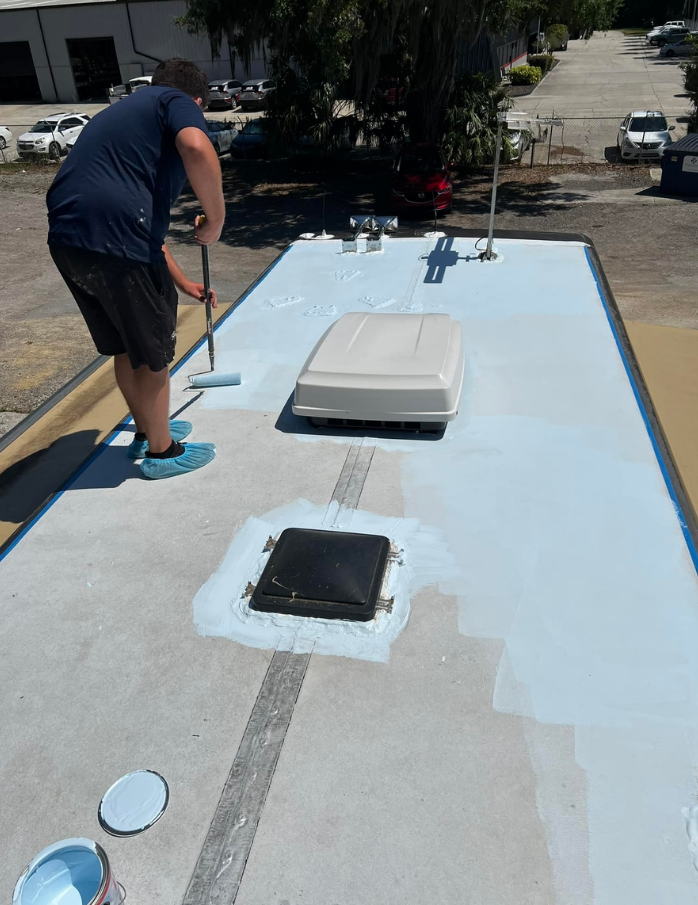
How Our Mobile Repair Works
Call or Book Online
Call us at 772-677-9762 or fill out our online form. Tell us what you're seeing, when it started, and what type of roof you've got. We'll give you a rough estimate and set up a time to come out.
Roof Inspection & Diagnosis
We get up on the roof and inspect every inch. We check every seal, every penetration, every seam. We use a moisture meter to check the substrate underneath for hidden water damage. Then we give you an honest assessment and a firm quote. No guesswork.
Repair & Protect
We do the repair on site with professional-grade materials. Dicor sealants, EPDM patches, proper primers. When we're done, we water-test the repair to make sure it's watertight. Then we show you what we did so you know what to keep an eye on.